
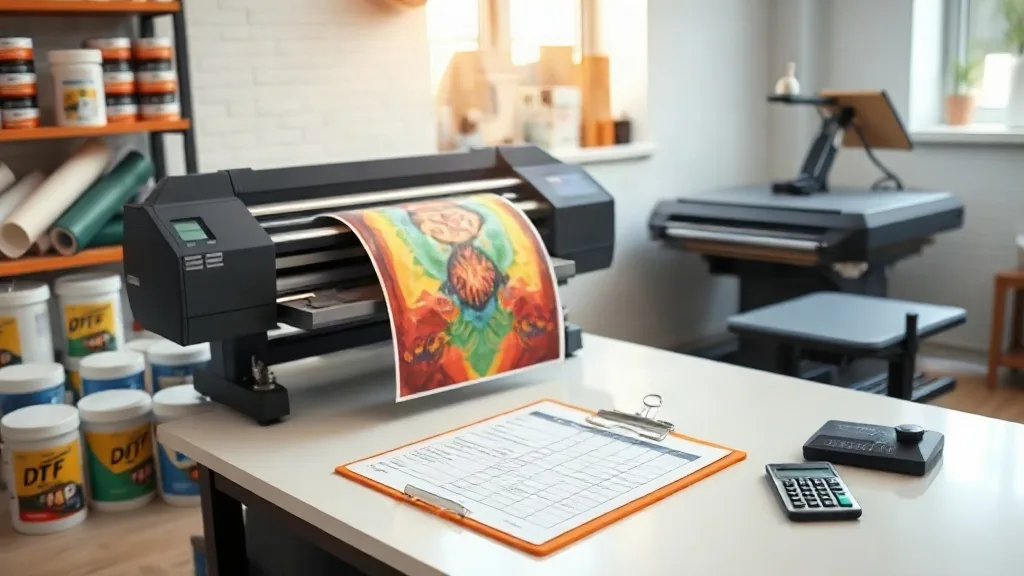
If you run a print shop, you already know that dtf transfers can be a game-changer for producing vibrant, durable designs on demand. But here's the catch: many shops jump into DTF without a clear picture of what each print actually costs them. The result? Prices that are either too high (scaring off customers) or too low (eating into profits). This guide dives deep into the numbers, so you can price with confidence and keep your margins healthy.
Why Costing Matters More Than Ever
DTF printing has democratized custom apparel, but it's also a competitive space. With more players entering the market, undercutting on price without understanding your costs is a fast track to closing shop. On the other hand, overpricing because you haven't tracked expenses can leave you uncompetitive. The sweet spot lies in knowing your numbers inside out.
The Components of DTF Transfer Cost
Every DTF transfer you produce carries a cost built from several components. Let's break them down.
1. Film
The PET film you print on is your canvas. Costs vary by quality and size. A roll of 13-inch film might cost around $30 to $50, while 24-inch rolls can run $80 to $120. The key is to calculate the cost per linear inch. For example, if a 13-inch roll costs $40 for 100 feet (1,200 inches), that's about $0.033 per inch. A typical A4-sized transfer (8.3 x 11.7 inches) uses roughly 12 inches of film, so film cost per print is about $0.40.
2. Ink
DTF inks are pigment-based and come in CMYK plus white. White ink is used heavily as a base layer, so it's a significant cost driver. A liter of DTF ink might cost $60 to $100. To estimate ink cost per print, you need to know your printer's ink consumption per square inch. As a rough guide, a full-color A4 transfer might use about 1.5 ml of ink. At $0.08 per ml, that's $0.12 per print.
3. Powder (Adhesive)
The thermoplastic polyurethane (TPU) powder that gives the transfer its adhesive quality is another expense. A kilogram of quality DTF powder costs around $20 to $40. The amount used per print depends on coverage, but typically an A4 transfer uses about 5 grams. At $0.03 per gram, that's $0.15 per print.
4. Labor
Don't forget the human element. Printing, powdering, curing, and pressing all take time. Even if you're a one-person shop, your time has value. Estimate how many minutes each step takes and assign an hourly rate. For example, if you spend 2 minutes per print at $20/hour, that's $0.67 per print. For larger runs, labor per unit decreases.
5. Equipment Depreciation and Maintenance
Your printer, shaker, and heat press are investments that wear out. Calculate annual depreciation and divide by the number of prints you expect to produce. Add maintenance costs like printhead cleaning and replacement parts. A common approach is to add 5-10% of the total material cost to cover equipment.
6. Overhead
Rent, utilities, software, and other fixed costs need to be allocated. If you produce 1,000 prints per month and your overhead is $2,000, that's $2 per print. However, this scales with volume, so it's essential to know your break-even point.
Calculating Your Cost Per Transfer: A Step-by-Step Example
Let's put it all together for an A4 full-color transfer on a 13-inch film roll:
- Film: $0.40
- Ink: $0.12
- Powder: $0.15
- Labor: $0.67
- Equipment (10% of materials): $0.07
- Overhead (allocated): $0.50
Total cost: $1.91 per print. This is your break-even point. Any price above this contributes to profit.
Pricing Strategies for Profit
Knowing your cost is step one. Now, how do you set a price that sells? Consider these approaches:
- Cost-plus pricing: Add a markup to your cost. A 50% markup on $1.91 gives $2.87. This is simple but may not reflect market willingness to pay.
- Value-based pricing: Charge based on the perceived value to the customer. A custom t-shirt with a unique design might command $15-$25 retail, so your transfer price should be a fraction that leaves room for the shirt and profit.
- Competitive pricing: Research what others charge for similar transfers. If you're just starting, you might price slightly lower to attract customers, but never below cost.
Remember, if you're selling to other shops, your pricing needs to leave them margin too. Wholesale pricing is typically 30-50% below retail.
Avoiding Hidden Costs
Some expenses are easy to overlook. Here are common pitfalls:
- Waste and misprints: Factor in a waste percentage (e.g., 5-10%) to cover test prints and errors.
- Shipping and handling: If you order supplies, include freight costs in your material cost.
- Storage and inventory: Film and ink have shelf lives; tying up cash in inventory has an opportunity cost.
- Customer service and reprints: Budget for the occasional unhappy customer and reprint.
Tools and Tips for Accurate Costing
Spreadsheets are your friend. Create a template where you input your specific costs and volumes. Update it regularly as supplier prices change. Many dtf printer manufacturers offer cost calculators, but they often use idealized numbers. Always use your real data.
If you're looking for dtf transfers near me, you might be considering outsourcing. In that case, compare the cost per transfer from a supplier against your in-house cost. Outsourcing can be cost-effective for low volumes or when you lack the time to produce in-house.
Scaling Your DTF Business
As your volume grows, your per-unit costs decrease due to economies of scale. Film and ink become cheaper per print when bought in bulk. Labor efficiency improves with practice. But don't fall into the trap of lowering prices too much; instead, use the savings to invest in better equipment or marketing.
Also, consider offering different sizes. A small transfer (e.g., 3x3 inches) uses less material and should be priced lower. Many shops use a tiered pricing structure: small, medium, large, and extra-large, with prices increasing accordingly.
Frequently Asked Questions
How much does a DTF transfer cost to make?
The cost varies based on materials, labor, and overhead. For an A4 full-color transfer, a realistic cost is around $1.50 to $2.50 in a small shop. Volume, supplier prices, and efficiency greatly affect this.
What is the average markup for DTF transfers?
Markups can range from 50% to 150% depending on your market and positioning. Custom apparel shops often mark up transfers 2-3 times the cost to cover shirt costs and profit.
Can I save money by buying DTF supplies in bulk?
Yes, bulk purchasing typically reduces per-unit costs. However, consider storage space and shelf life. Ink and powder have expiration dates, so only buy what you can use within a few months.
How do I price DTF transfers for wholesale?
Wholesale pricing should cover your costs and provide a modest profit while leaving room for your customer's markup. A common approach is to offer tiered pricing based on quantity, with discounts for larger orders.
What hidden costs should I watch out for?
Common hidden costs include printer maintenance, waste from misprints, shipping fees, and the time spent on customer service. Always include a buffer for these in your pricing.
Costing your DTF transfers accurately is the foundation of a profitable print business. Take the time to calculate your true costs, review them regularly, and adjust your prices as needed. With a clear understanding of your numbers, you can compete confidently and grow sustainably.