
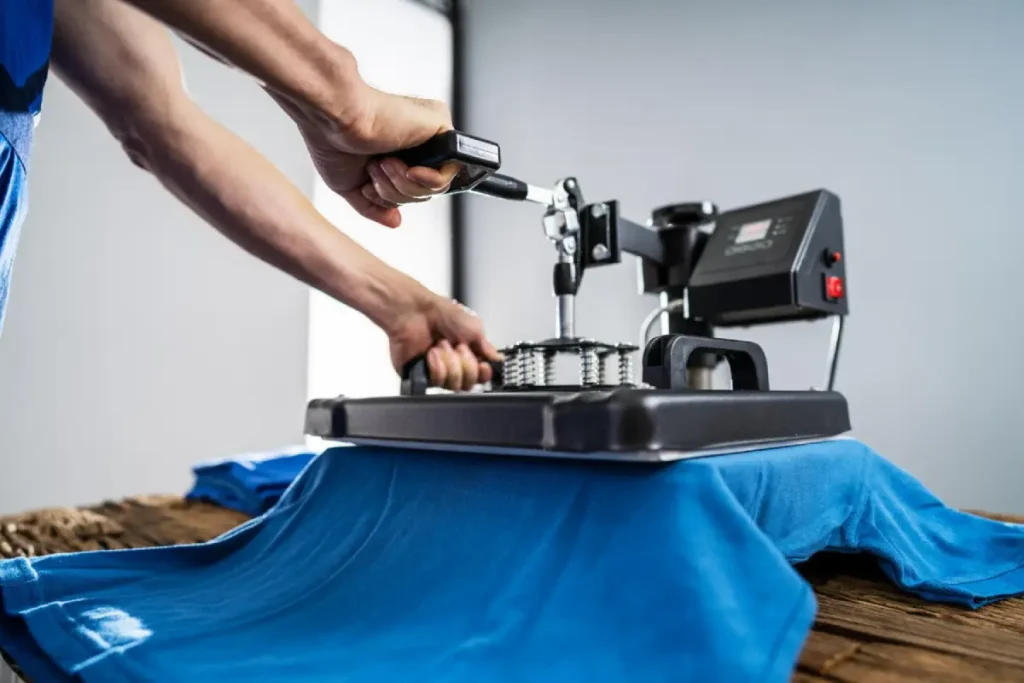
In the high-velocity world of branded apparel, the divide between a “print shop” and a “retail manufacturer” is defined by the governance of invisible variables. You’ve likely heard about heat, time, and pressure—but to truly scale and capture premium margins, you need to stop focusing on the “how-to” and start focusing on the “why-it-fails.” The apparel market is moving toward an era of **Predictive Durability**, where your output isn’t just a design; it’s a stress-tested asset.
Most dtf operators treat the process as a creative sequence, but it is actually a metallurgical and chemical event. When you press a transfer, you are managing a phase-change in the adhesive that must perfectly align with the fiber’s thermal expansion. If these two variables are out of sync, you aren’t creating a bond—you’re creating a ticking time bomb of delamination. To build a label that retailers trust, you must treat your floor as a controlled laboratory.
The Physics of “Bond-State” Engineering
To reach elite status, move beyond the standard manual. Your production must account for the Environmental Delta:
- Hydro-Neutralization: Your shop’s ambient humidity is the silent thief of quality. If the air in your room changes by 20%, your adhesive powder’s “melt-flow index” changes as well. Implement a desiccant-controlled storage protocol to keep your raw materials in a static state before they reach the press.
- Platen-Flux Calibration: A heat press is not a static object; it is a heat-sink. When you press a cold garment, the platen’s temperature drops significantly for the first three seconds. Professional manufacturers calibrate their dwell-time to account for this “thermal lag” to ensure the adhesive actually reaches its fusion point during that crucial first window.
- Structural Equilibrium: The “Cool-Peel” is not just about the peel—it is about allowing the polymer chains to realign as they reach room temperature while still compressed against the fabric fibers. Rushing the removal of the carrier film is a structural error that introduces microscopic fractures into the bond.
The Strategic Pivot: Micro-Manufacturing
The “bulk-stock” era is over. Carrying inventory is a liability that limits your ability to pivot. By leveraging a localized dtf transfer production model, you effectively turn your supply chain into a “live-data” stream. You don’t need to guess what will sell in three months; you print what sells today.
This allows for rapid design-to-shelf cycles that mass-market players cannot match. If a design goes viral at 9:00 AM, you can have a batch of retail-ready units by 2:00 PM. This speed is your competitive moat. It allows you to run your business with near-zero capital tied up in unsold shirts, maximizing your cash flow and letting you reinvest in the only thing that matters: building the brand’s equity.
Data-Driven Governance: Beyond the “Wash Test”
Stop “testing” your shirts—start “auditing” your output. Every production run should be subjected to a **Data-Point Log**. Record the room humidity, the platen temperature, the ambient air pressure, and the specific lot number of the adhesive used. When you do this, you stop being a business owner and start being a manufacturer.
When a return occurs, you don’t guess the cause. You pull the log, see that the humidity was high that morning, and identify the root cause instantly. This isn’t just about fixing shirts; it’s about eliminating the possibility of failure through systemic refinement. That is how you stop being a “local printer” and start being a “national label.”
Frequently Asked Questions
Why does my transfer look different on different fabric types?
Fabrics have varying “thermal conductivity.” A heavyweight fleece acts as an insulator, while a thin polyester acts as a conductor. You must create a “Fabric-Coefficient Table” for your shop that dictates specific heat-offset values for each textile type, ensuring the adhesive always hits the same target temperature regardless of the fabric’s thickness.
What is the most effective way to eliminate “ghosting” or print-shifting?
Ghosting is caused by a vacuum effect during the press-opening. Use a “Tack-and-Release” method: use minimal heat-resistant tape to secure the transfer, and then use a “Slow-Release” technique where you crack the press only an inch for two seconds to break the vacuum seal before opening the platen completely.
Is DTF better for high-end luxury fabrics or just promo wear?
It is increasingly the choice for luxury because of its ability to replicate ultra-fine detail without the “heavy-weight” feel of screen printing. The key to luxury is the “Matte-Density” finish, which requires specific RIP software profiles to keep the adhesive layer thin but color-dense.
How do I know if my adhesive powder is past its prime?
Check the “flow-point.” Take a small sample of powder and heat it on a piece of scrap film. If it doesn’t melt into a uniform, clear, sticky liquid almost instantly, it has absorbed too much moisture or has aged, and should be discarded.
Building a successful, high-quality apparel brand is a journey of continuous technical refinement. By mastering the potential of dtf, you position your brand to compete at the highest level of the custom merchandise market. Harwin is committed to providing the industry insights you need to turn your production floor into a professional, profitable enterprise. Start optimizing your workflow today—your commitment to quality is the most valuable investment you can make for your brand’s future.